The Vault
10 min · Maison memorandum
Mirrors the archive entry for Alexandrite — Pleochroism and daylight-to-incandescent shift.
Phenomenon and definition
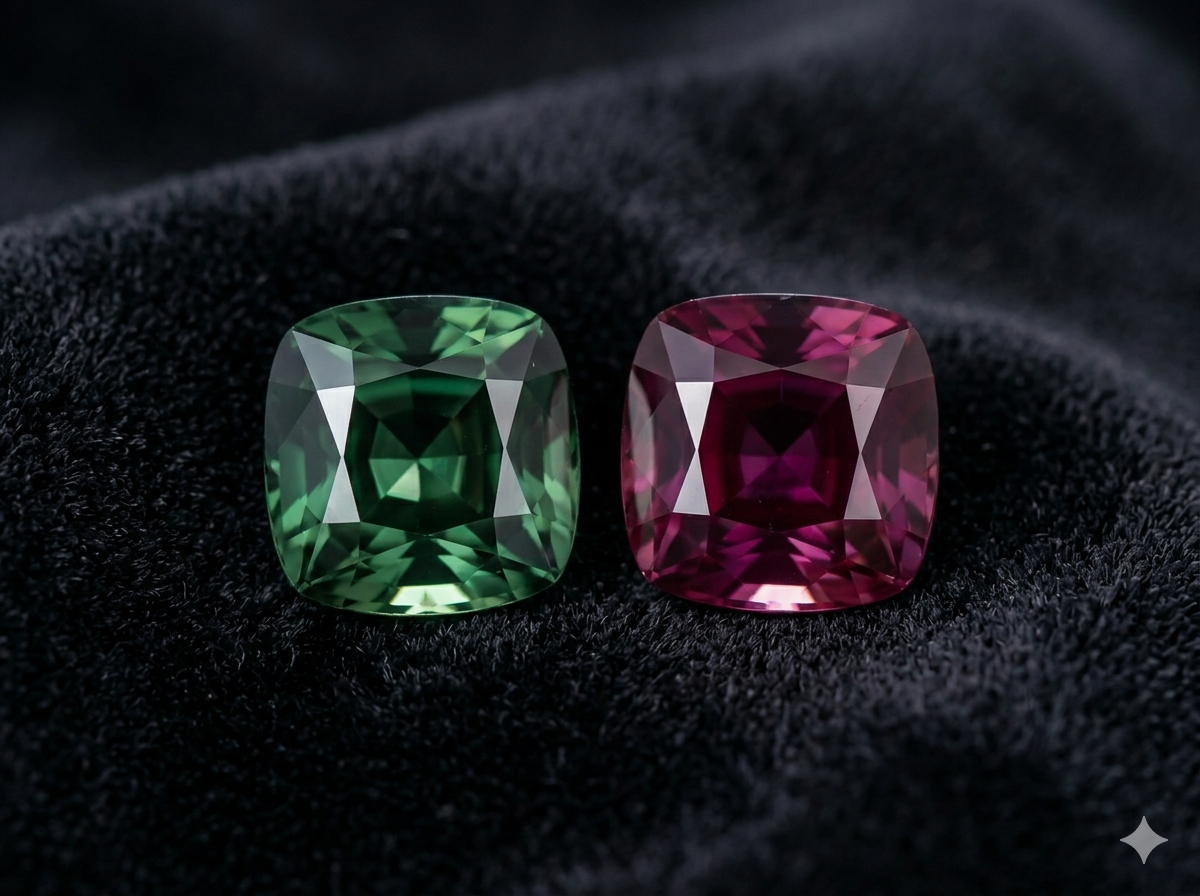
Alexandrite is chromium-bearing chrysoberyl exhibiting pronounced color change between daylight-equivalent and incandescent sources. Investment grade demands a clean separation of hues with limited brown or gray secondary components. The phenomenon is axis-sensitive; careless orientation can mute the effect even when rough was promising.
Laboratory descriptions
GIA and AGL describe color-change strength, hue pairs, and treatment probability when determinable. Reports are not substitutes for observing the stone under standardized sources in person — fluorescence, transmission windows, and pleochroic bleed can shift apparent behavior relative to still photography.
Origin narratives and rarity
Historic Russian material is culturally iconic but rarely traded at scale today. Fine modern goods from select localities can show stronger change than mediocre classic pieces. Rarity is therefore tied to phenomenon quality and clarity at size, not only to postal codes on old invoices.
Collector checklist
We prioritize pronounced change, conservative treatment status, and cutting that respects pleochroic axes. For bespoke settings, we also review durability considerations — chrysoberyl is tough, but thin girdles and high crowns require protective design choices.