The Vault
12 min · Maison memorandum
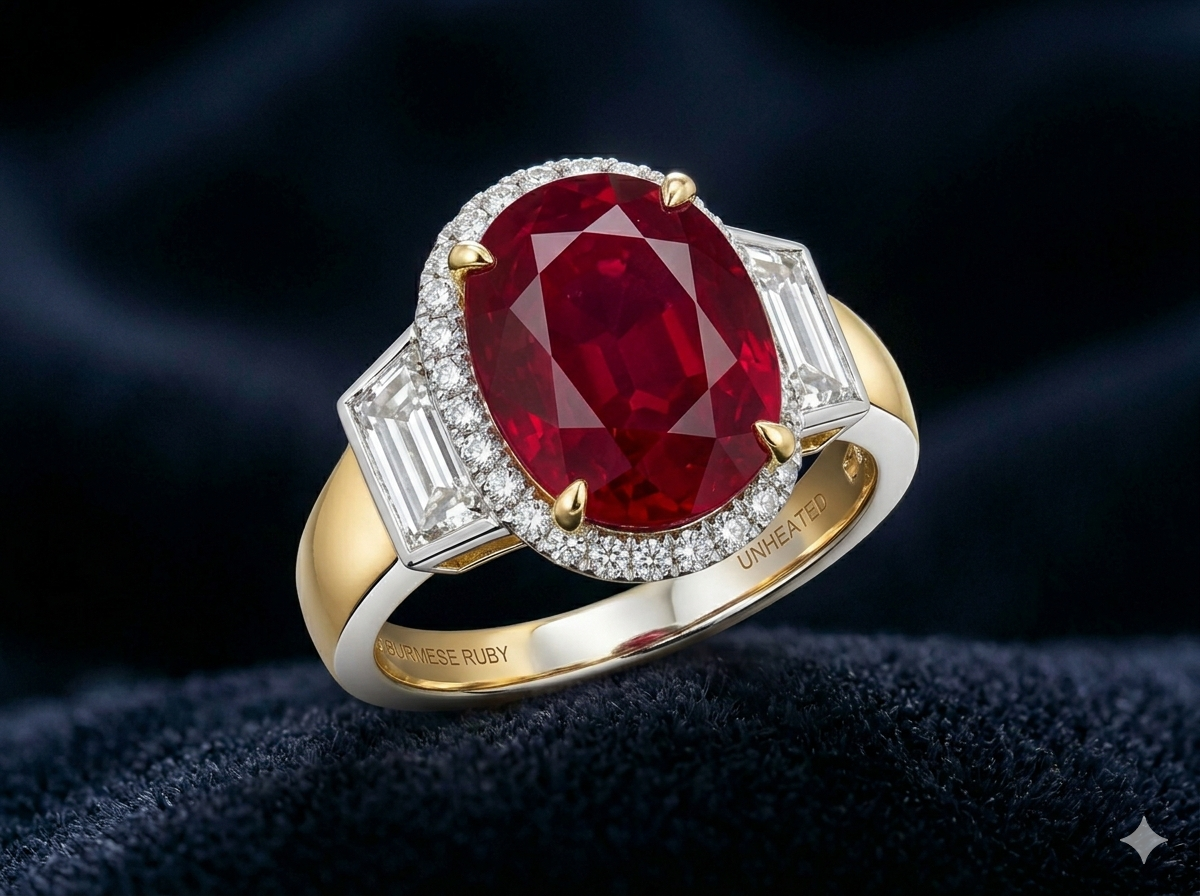
Mirrors the archive entry for Burmese Rubies — Pigeon’s blood mythos, chromium dominance.
Geology and optical lift
Classic marble-hosted ruby from Myanmar’s belts forms under pressure–temperature paths that concentrate chromium. Rutile needles and crystal inclusions can create ‘silk’ that, in the right density, improves face-up color by scattering light. Strong fluorescence under daylight-equivalent sources can lift apparent saturation — a signature collectors learn to see rather than over-read on paper alone.
Laboratory language (origin and heat)
Gübelin and SSEF apply tightly bounded trade color terms such as pigeon’s blood only when hue, tone, and saturation thresholds align. Origin opinions are probability statements grounded in inclusion suites and chemistry. Heat indication follows evidence rules similar to sapphire — unheated goods in fine red at meaningful size are statistically rare and attract premium underwriting when provenance is clean.
Ethical sourcing and institutional compliance
Sanctions, import rules, and internal compliance policies materially affect which Burmese-origin goods can trade in which jurisdictions. Auction houses and private banks increasingly require documentary chains that survive legal review, not only gemological opinion. We treat provenance as a first-class risk layer alongside clarity of treatment and cut quality.
Portfolio role
Top Burmese rubies with legal chains and matching major-laboratory files remain auction staples. Liquidity is concentrated at masterpiece caliber; mid-market goods require sharper relative-value work. The memorandum standard is simple: if the file cannot travel across borders and counterparties without friction, the stone is not priced for institutional sleep.