The Vault
11 min · Maison memorandum
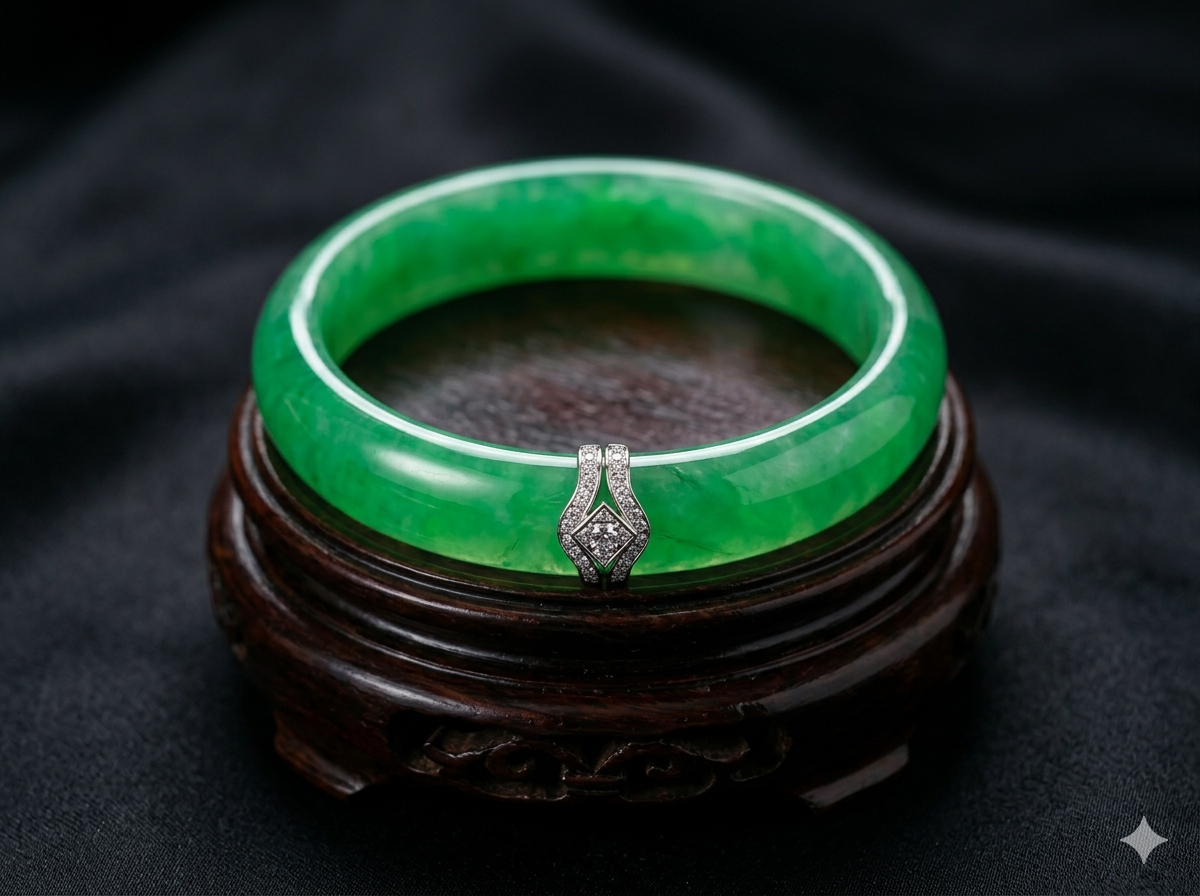
Mirrors the archive entry for Jadeite Jade — Imperial green, translucency, tactile polish.
Material science in collector terms
Jadeite is a pyroxene aggregate; imperial green arises where chromium sits in tight, fine-grained intergrowths that allow an even, ‘watery’ glow. Texture — the fineness of crystallite packing — is as important as chromophore concentration. Coarse grain can carry strong color yet fail the tactile and optical tests serious jade desks apply.
Type A, B, C and laboratory naming
Regional certificates distinguish natural Type A jadeite from polymer-impregnated or dyed materials using FTIR and other methods. The investment boundary is not snobbery about treatment categories — it is transparency, stability over time, and how price was set relative to disclosure. We read polymer lines with the same attention given to oiling degree on emeralds.
Hololiths, bangles, and carving economics
Homogeneous imperial color in large hololiths and high-translucency bangles sits at the intersection of geology and carving yield. Waste factors are severe; a single fracture can erase years of sourcing. That is why homogeneous pieces with verified natural status trade at non-linear premiums to loose goods of similar face-up color.
Market liquidity
Asian collector markets anchor depth, but global institutional interest has risen as certificates internationalize. Long-duration performance favors conservative disclosure, stable color, and craftsmanship that respects the stone’s natural grain rather than fighting it with excessive surface compensation.